I've Forgotten How To Be Silly

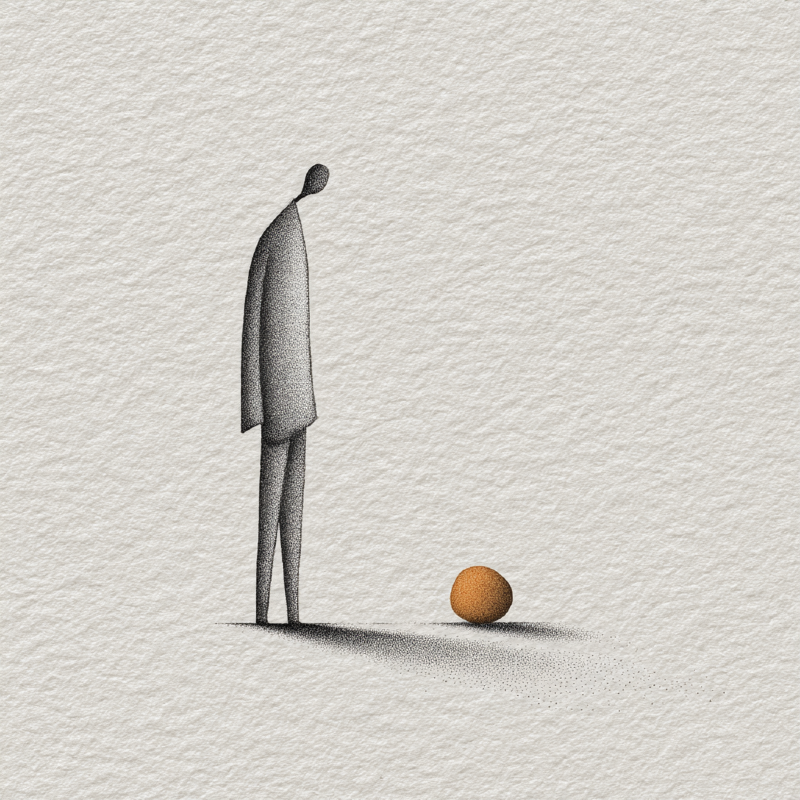
Having launched two businesses this last year (one of which died a horrible death), I care an awful lot these days about standards, discipline, and building a solid career and a fulfilling life.
I am also, by trade, an actor, which means I care about playfulness, imagination, storytelling and silliness.
There are clear contradictions in that identity. On one side, exists the version of me that tracks progress, manages risk, and wants everything to be deliberate and clean. On the other, Silly Me - the part that does stupid voices, dances whenever possible, and follows a thread of an idea purely because it amuses me. This is also the part I think I'm subconsciously encouraging myself to grow out of.
The more responsibility I've taken on, the more serious I've become. Launching businesses, managing money, none of that lends itself to messing about. I have become careful with my words, careful with my time, and careful with how I come across.
It's frightfully mature. But I'm starting to think it's not entirely necessary.
The irony is that the environments I respect the most, rehearsal rooms, good theatre companies, disciplined creative spaces, are not humourless. They are structured, obviously. Standards are high, and work is taken seriously. But inside that seriousness, there is room to play. Actors try things that don't work. Directors laugh. Scenes are pushed too far and then pulled back. The work deepens precisely because it isn't treated like porcelain.
And I think a lot of us have tightened up in the same way.
We've absorbed the idea, partly through hustle culture, partly through adulthood itself, that responsibility and lightness can't coexist. That once you're building something important, be that a career, a business, a family, even a reputation, you're supposed to grow out of playfulness. That silliness is for teenagers, not adults with mortgages and deadlines.
And so, as ever, we adjust.
We become more considered. More deliberate. More aware of how we sound. We filter our jokes. We polish our thoughts before we say them. We don't want to look naïve, or unserious, or like we're not in control. We stop letting ourselves be a bit ridiculous. We stop messing about. We can't risk looking foolish, even briefly.
Sad really isn't it…
The feeling that everything I do carries weight has led me to start monitoring myself. I measure my tone and refine my ideas before I speak them. I think part of this is through writing and publishing on Protocol - I've convinced myself I have standards to uphold. And so I hesitate before trying something new, or putting pen to paper, because I'd rather avoid looking incompetent than risk learning in public.
Honestly, it's exhausting. A kind of constant self-surveillance that drains my energy without producing anything useful.
I'm starting to think silliness isn't the opposite of discipline. It's what keeps discipline from turning into rigidity.
Here's what I mean.
When I approach something with a lighter touch, when I give myself permission to be bad at it, my internal monitoring starts to drop. I stop running the attempt through ten filters before it reaches the page, the conversation, or the camera. I just do the thing.
And in doing the thing, badly, without ceremony or with one eye on external opinion or view, I get something far more useful than competence.
I get evidence.
Evidence that I can try. Evidence that I can survive small failures. Evidence that nothing catastrophic happens when I look foolish for a moment.
Psychologists have written about self-efficacy for decades - the belief that you can handle what you attempt. That belief isn't built through telling yourself you're capable, it's built through repeated exposure to manageable risk. Through doing things that stretch you just enough, before discovering you're actually still intact.
Silliness, it seems to me, is one of the purest ways to create that exposure.
When the stakes are low, you experiment more. When you experiment more, you gather more feedback. When you gather feedback, you adjust. When you adjust, you improve. All it requires is lowering the emotional cost of trying.
Because when your identity isn't strapped to every result, you recover faster and try again sooner. You're less interested in looking competent and more interested in finding out what's possible. The outcome isn't a verdict. It's simply more information.
This isn't just a feeling I’ve recognised - it's how the most disciplined creative environments in the world actually operate.
Pixar is probably the most consistently excellent creative company of the last thirty years. Fourteen consecutive box-office hits. A reputation for near-flawless storytelling. The standards are extraordinary.
And at the centre of that operation is a system built entirely around permission to be rough.
Ed Catmull, the co-founder, created something called the Braintrust - a recurring meeting where directors show early cuts of their films to a room of trusted peers. These early cuts, by Catmull's own description, are objectively awful. Not rough-around-the-edges awful. Genuinely bad. And he was blunt about it; the job was to take films from something terrible to something that worked.
The meetings had rules of course - No hierarchy. No authority. The Braintrust could point out problems, but the director didn't have to take a single suggestion. Nobody in that room was grading the work. Nobody was attaching the director's competence to the state of the early cut. The whole point was to make it safe to show something unfinished, because if showing bad work felt dangerous, people would stop showing it early, and the films would suffer.
Sometimes those meetings were unmitigated disasters. But sometimes, as Catmull put it, the ego left the room, and that's when the work moved forward.
The structure held the room. The looseness did the actual work.
This pattern shows up everywhere creativity has been studied seriously. Teresa Amabile, a psychologist at Harvard, spent decades researching what kills creative output. Her findings were consistent across children and adults; when people expected their work to be evaluated, when they felt watched, when reward or competition entered the frame, creativity dropped. They narrowed their range. They defaulted to the safe option. They stopped exploring.
Even children, when told their drawings would be graded, produced more conventional work. Adults are no different. We just disguise it better.
People do their best work when they've forgotten anyone's watching.
There's an obvious objection here.
If you loosen the stakes, if you lower the pressure, if you invite silliness back in, then what stops everything from collapsing into avoidance?
And it's a fair question. We've all seen the other version. We’ve met him. The person who treats everything lightly and never builds anything. The one who hides behind humour when things get hard. The one who confuses play with permission to coast.
That's not what I'm talking about here.
Silliness only works inside structure.
When the foundations of your life are stable, when you show up, when your word still means something, when the basics are handled, looseness doesn't unravel or you. It doesn't threaten your standards. It doesn't jeopardise your direction. It gives you room to move without the weight of consequence pressing on every action.
In that environment, silliness stops being escape and starts being experimentation. You can try something without announcing it, you can sketch an idea without committing to it, and most importantly, you can attempt a new direction without treating it like a referendum on who you are. The attempt carries information, not identity.
Without structure, silliness dissolves you.
Inside structure, it's the thing that stops you calcifying.
When everything in your life carries weight or feels heavy, you start requiring proof that something will work before you're willing to try it. Which sounds reasonable right? But it's also how people stop moving altogether.
I know I’m guilty of this (thank you self-awareness)...
I’ve been in danger of becoming over-efficient. Careful. Increasingly good at protecting what I’ve been building, but also becoming narrower, and restricted. Less improvisation. Fewer ideas that began badly but improved in public. Repeatedly I’ve told myself this is focus, or maturity.
I've even noticed it creeping into my conversations. Into my work. Into the way I plan things, deeply, before they've even left the notebook.
And I know I'm the only one.
You start mistaking caution for maturity. You call hesitation wisdom. You label stagnation as stability. Once your tolerance for imperfection disappears, so does the willingness to try anything that isn't already within your range.
Permanent seriousness feels mature. It feels responsible. It can even feel disciplined.
It just isn't very alive.
Take Care,
- James