The Problem With Self-Help

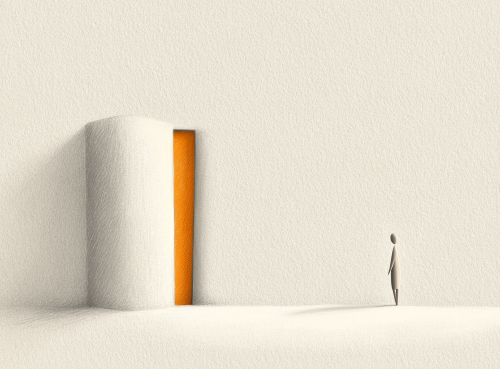
Self-help lives in the future.
“Your best life is waiting.”
“Step into your higher self.”
“Become the version of you who doesn’t hesitate.”
“Design your ideal life.”
Everything it promises sits just ahead of where you are now; the better body, the clearer mind, the calmer relationships, the version of you who has finally sorted things out.
Alluring, isn't it…
The aspirational language, always forward-facing, always framed as a transformation waiting to happen if you do the work.
The trouble is in the requirements.
Motivation.
Not discipline. Or structure. Motivation. You’re expected to just summon this magical feeling before anything else can start. The internal surge is meant to carry you through the early phase where nothing is reinforcing you, nothing yet proves the effort is worth it, and everything still feels hypothetical.
Self-help assumes you can generate that level of energy on demand.
It assumes you can act consistently before there’s evidence the effort is being returned in any notable way. That you can tolerate weeks or months of effort without feedback. That you can believe in outcomes you haven’t experienced yet. That you can behave like a future version of yourself you don’t yet trust exists.
I don’t buy it, and neither should you.
The entire genre is propped up on - “You have to want it badly enough,” “You have to commit,” “You have to decide.” All of that language assumes a surplus of psychological energy - clarity, optimism, confidence - that many of us simply don’t have available, especially at the precise moment we go looking for help.
Motivation is a temporary psychological state. It depends on sleep, stability, emotional bandwidth, and a sense that effort will be rewarded. It depends on a nervous system that isn’t already overloaded. And who has one of those?
More specifically, in psychology, motivation refers to a short-lived increase in willingness to initiate effort toward a goal. It is a state, not a capacity.
It has three core properties:
1. It is affective (emotional)
Motivation is closely tied to mood, arousal, and emotion. Excitement, hope, anger, fear, inspiration, these can all temporarily raise motivation. When mood drops, motivation usually drops with it.
This is why motivation is unreliable under stress, fatigue, grief, uncertainty, or pressure. Those states blunt affect.
2. It is energy-dependent
Motivation requires available cognitive and physical energy. When sleep is poor, blood sugar is unstable, stress is high, or decision load is heavy, motivation collapses - even if values remain intact.
This is well supported in self-regulation research; depleted systems do not initiate effort easily.
3. It is context-sensitive
Motivation increases when;
- progress feels visible
- effort feels likely to pay off
- identity feels affirmed
- the environment reduces friction
It falls when;
- outcomes are delayed
- feedback is ambiguous
- effort feels futile
- identity feels threatened
It is mechanical, rather than moral.
So the most important distinction is this;
Motivation is a feeling that makes starting easier, not one that can sustain action.
Self-help treats motivation as if it were a prerequisite for change. In reality, it is a by-product of certain conditions; safety, clarity, momentum, and recent proof.
This is why motivation surges at the beginning of things;
- the first week of a plan
- after a book, a talk, a podcast
- during moments of emotional clarity
And why it disappears precisely when change becomes difficult;
- when progress slows
- when life interferes
- when effort no longer feels rewarding
From a behavioural perspective, motivation does not cause action in any reliable way. Action creates motivation far more consistently than motivation creates action. This is supported by behavioural activation research and self-efficacy theory (Bandura).
Check this out then; We don’t fail because we lack character, or because we don’t care (far from it). But because we are trying to rebuild from a position of depletion. We are already managing more than we can comfortably carry. Asking us to generate sustained motivation on top of that isn’t empowering. It’s simply unrealistic.
Self-help tends to interpret this failure as a personal issue; resistance, mindset, fear, lack of belief. The antidote is usually more inspiration, more urgency, more reframing. Try harder. Want it more. Visualise better. In my experience, motivation doesn’t respond well to pressure. I’ve lost track of the number of occasions I’ve practically screamed at myself for procrastinating. I’ve learned that motivation isn’t something you can threaten into existence.
Psychology has been clear on this for decades. Motivation is volatile. It fluctuates with mood, stress, sleep, and perceived progress. It spikes briefly when something feels new or emotionally charged, then drops back to baseline. Without reinforcement, it decays. And without proof, it collapses.
This is why so many people feel a surge of motivation after reading a new book or making a big decision, then feel worse a few weeks later. Its not because the idea was wrong, but because the fuel source ran out.
The requirement for motivation excludes most people most of the time.
It excludes people who are burnt out, grieving, lonely, or stuck in unstable conditions. It excludes anyone whose nervous system is prioritising survival over optimisation. And crucially, it excludes people at the exact point they are most likely to seek help.
That’s the structural flaw.
Self-help assumes the presence of the very thing its audience is lacking in the first place…
Protocol, the platform and world view I’ve been building since mid 2025 starts from the opposite assumption; that motivation is unreliable, intermittent, and not a foundation to build a life on.
The difference isn’t philosophical. It’s practical.
If a system requires motivation to function, it only works when motivation is present. When life gets harder, when energy drops, when certainty thins, the system breaks. And when it breaks, people blame themselves rather than the design.
This is why so many people think they’re “bad at change” or “can’t stick to things”, when what they’re actually bad at is maintaining motivation without structure. Which is to say; they’re human.
Motivation isn’t a starting point. It’s a by-product.
When effort leads somewhere visible, motivation appears. When actions compound, motivation follows. When trust in yourself increases, motivation becomes almost irrelevant. But when motivation is treated as the entry fee, everything downstream depends on a feeling that cannot be guaranteed.
Why Protocol Exists
This is where Protocol enters the picture. Hi there…
Not as a replacement belief system, and not as another promise about who you could become if you tried harder, but as a response to a very ordinary problem; most people are trying to build their lives on motivation, even though motivation is the first thing to disappear when they’re under pressure.
Protocol starts from a simpler, less flattering assumption; That motivation is unreliable. That clarity is intermittent. That energy rises and falls. And that any system which depends on you feeling a certain way before it works is going to fail you precisely when you need it most.
So instead of asking for motivation, Protocol asks a different question: what would still work if motivation never showed up at all?
Rather than aiming to inspire better behaviour, Protocol is designed to make behaviour happen by default. Rather than asking you to want something badly enough, I’m aiming to give you structures that will move you forward whether you feel inspired or not. Rather than appealing to your future self, it works with the version of you that exists right now.
Take something as basic as a morning routine. Not as a productivity hack or a self-improvement ritual, but as a system that removes choice from the equation, and instead introduces sequencing. Hydration happens first, because the body needs it and because it creates stillness. Stillness (clarity) leads naturally into movement, because the brain and body align. Movement leads into output, because the mind is clearer once the body has done something active.
At no point does this require enthusiasm. There’s no negotiation with myself, no internal debate, no need to convince myself that ‘today’s the day’. The system runs because the environment supports it. The order does the work. I just step into it.
This is the pattern that I (Protocol) am trying to repeat everywhere.
Structure first. Then direction. Identity later, as a by-product.
When people struggle with consistency, it’s rarely because they don’t care. It’s because they are making too many decisions too early, relying on feelings that fluctuate, and asking willpower to do a job it was never designed for. Protocol removes those pressure points. It replaces them with sequences, constraints, and rhythms that make progress more likely than stagnation.
Simple but elegant (I think).
And let's face it, modern life already runs on systems. Complex Algorithms decide what you see. Schedules decide when you work. Environments shape your behaviour before you’ve had a chance to think about it. Protocol doesn’t pretend you can opt out of that reality. It accepts it, then uses the same logic deliberately, in your favour.
Instead of asking you to be stronger, it makes strength less necessary.
Instead of asking you to believe in yourself, it gives you repeated proof you can trust.
Instead of aiming for transformation, it builds reliability.
Over time, that reliability changes how you see yourself, and not because you’ve adopted a new identity, but because you keep watching yourself follow through on these small ‘promises’.
This is why my work here doesn’t, and shouldn’t feel motivational. It’s deliberate.
I’m designing it to work on your worst days, not your best ones. To function when you’re tired, flat, distracted, or lacking in self trust. To give you something solid to stand on when optimism is thin and the future feels abstract.
Self-help asks you to become someone else.
Self-help asks you to feel differently first.
Self-help asks you to conjure up motivation when none exists.
You don’t need to believe in yourself first.
You don’t need a breakthrough.
You need something you can do tomorrow morning regardless of motivation.
Motivation can come later.
Self-trust comes from evidence.
Evidence comes from structure.
“You don’t rise to the level of your goals, you fall to the level of your systems”
Atomic Habits - James Clear
So create a system that doesn’t require you to be at your best.
Take Care
- James