Your Future Self Doesn’t Care If You’re Ready

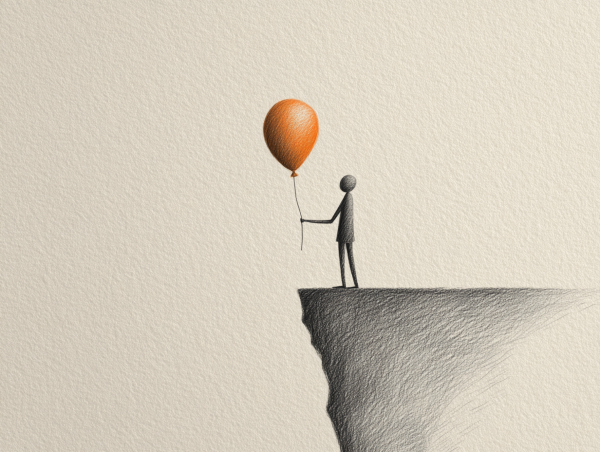
We’re full of hesitation, overthinking, caution, rational fears, irrational fears, stories we’ve inherited, and habits we’ve rehearsed for years. These are common traits in almost all of us, an unfortunate part of the human experience. They stop us from taking risks, backing ourselves and moving forward with any kind of self confidence. They leave space for us to never commit to addressing the failings in our current life, whilst simultaneously letting down the future version of us
The person who wakes up six months from now has to live with whatever you did or didn’t do today.
It’s an unsettling thought.
How many moments in your life were delayed because you weren’t “ready”? How many ideas sat dormant because you needed the right time, the right plan, the right feeling? You look back and see years that could have unfolded differently if you’d just acted a little sooner. Not recklessly, not blindly, just sooner.
Your future self doesn’t give two shits whether you’re ready. They only care that you started.
I’m not encouraging urgency, or heroics. I’m pushing responsibility. Responsibility that comes from recognising that a lot of the suffering in your life comes from postponement, not failure.
—
The Readiness Loop
I think a lot of us are stuck in a ‘readiness loop’. A cycle of:
“I need to feel prepared.”
“I need to feel confident.”
“I need more time.”
“I need more clarity.”
And normally,
“I should make another list…”
Sounds reasonable. Sensible. Mature, even. But beneath it sits something more fragile; a reluctance to disrupt the life you already live, even if it’s a life you’re tired of living.
In some ways, ‘readiness’ becomes a shield.
A polite delay.
A justification for staying exactly where you are.
You stay in the relationship long after it’s drained you, because you don’t feel ready to leave.
You stay in the job that has crushed your spirit, because you don’t feel ready to step into uncertainty.
You avoid the difficult conversation because you don’t feel ready for the consequences.
You postpone the project because you don’t want to be caught trying.
Years pass. Identity stalls. Growth slows until it's barely noticeable. Potential gets smothered by a version of you that is utterly convinced it needs permission.
Underneath all of it is a very simple pattern; you’re waiting to feel different before you behave differently.
Feelings don’t lead. They follow.
And deep down, you know this. Every meaningful shift in your life happened long before you felt prepared for it. A breakup. A move. A decision you’d been avoiding. A moment where something inside you crossed a line and you acted, not because you were ready, but because staying where you were became impossible.
Readiness is rarely a feeling.
—
A Shift in Lens
The principle behind this shift is simple; your future self doesn’t care if you’re ready, they just need you to be reliable.
The adult you become will not thank the present you for waiting until everything felt safe. They will thank you for starting the thing, investing time and effort into it, being consistent, turning setbacks into feedback, and trusting yourself.
Readiness is emotional.
Reliability is behavioural.
When you shift the lens from “Do I feel prepared?” to “Can I trust myself to make the move and handle what comes next?”, everything changes. The standard is different. The responsibility is different. You stop fixating on the perfect entry point and start paying attention to the small actions that build stability, identity, and momentum.
You stop waiting for courage and start behaving your way into it.
Your future self isn’t grading your timing.
They’re simply living inside the structure you create.
—
Building Trust.
What do you picture when you think of your future self? Someone more impressive? More capable? A more polished version of who you are now? I bet they exude discipline, confidence, certainty and emotional clarity. They’ve definitely escaped the flaws, fears, and inconsistencies of the present version of you.
That version doesn’t appear out of nowhere. They don’t arrive fully formed. They’re built from the exact days you’re living now.
The fantasy you’ve been leaning on, the idea that clarity arrives first, then action follows, is entirely backwards. If you look back at your own life honestly, you’ll notice that the most defining moments didn’t come from readiness. They came from friction.
We grow when the cost of staying the same becomes heavier than the discomfort of change.
And yet, even with this knowledge, we always hesitate. Not because we’re lazy or unambitious, but because every behavioural change threatens the identity that has kept us alive so far. Even dysfunctional identities have utility. They’re familiar. Predictable. Safe.
To act before you feel ready is to contradict your own history. It’s to say; the person I have been is no longer the person I am willing to be, and I am willing to reshape my identity accordingly.
What we call readiness is often a desire to avoid the identity discomfort that comes from change.
You don’t become consistent by consistently planning, but never executing.
You become consistent by my making small changes repeatedly, until your self-image updates in line with who you are to become.
You don’t become confident by waiting for confidence, or by shouting at yourself in a mirror.
You become confident by proving to yourself that you can survive exposure, uncertainty, and small doses of failure.
You don’t become disciplined by listening to podcasts about discipline.
You become disciplined by keeping promises in those micro-moments when you least feel like it.
This is why readiness becomes such a trap. It keeps the present self comfortable at the expense of the future self. It protects emotion and sacrifices identity.
When you refuse to act until you “feel ready,” you’re outsourcing responsibility to a feeling that may never arrive.
And that’s how a decade can disappear.
If you’re not careful, readiness becomes a socially acceptable disguise for fear.
People will nod empathetically when you say you’re “waiting until the time is right,” but the truth is, the time rarely becomes right. Not because the world is cruel, but because your nervous system has been trained to equate change with threat.
That system doesn’t evolve through theory. It evolves through exposure.
Each small action is psychological backing;
I can handle being someone new.
I can handle uncertainty.
I can handle myself.
I trust me.
Over time, that backing accumulates into identity. And identity is what makes you trustworthy to your future self. Not readiness. Reliability.
—
protocol;
Here’s the practical part. Give yourself 30 minutes of quiet time to sit and think through it. Revisit it often.
Collapse your Timeline
Instead of asking, “Am I ready to start?”, ask, “What would I do if I had to begin today?”
No hypotheticals. No perfect plans. Just the smallest viable step that creates movement.
Readiness demands the ideal start.
Reliability demands a real one.
Replace Intention with Proof
Your future self cannot use your intentions. They can only use your evidence.
Build proof in small, unglamorous ways:
- One uncomfortable action a day.
- One promise kept to yourself.
- One behaviour repeated long enough to become familiar.
Proof becomes structure.
Structure becomes identity.
Identity becomes momentum.
Narrow the Variables
Most hesitation comes from having too many moving parts. Reduce the decision down to one behaviour you can perform consistently:
Write one paragraph.
Go to the gym for ten minutes.
Send the email.
Clean the one room.
Have the single honest conversation.
Your mind wants complexity.
Your future self wants movement.
Adopt a “Two Futures” Mindset
Each day, choose between two versions of yourself:
- The future built by hesitation.
- The future built by action.
Every small choice tilts the scale. The power isn’t in the size of the action, it’s in the direction.
Build Emotional Tolerance, Not Motivation
Your job isn’t to eliminate discomfort. Discomfort will always exist. It’s to expand your capacity to keep moving while discomfort is present.
A reliable adult isn’t someone who feels confident.
It’s someone who can act when there is tension in their chest and doubt in their mind.
Audit the Cost of Waiting
Ask yourself;
“What does waiting cost me if I continue for another month? Another year?”
Make the price visible. What will that look like?
Most hesitation survives because its cost is hidden.
Update Identity Through Behaviour
After each small action, reinforce it:
“This is who I am now. I am someone who moves early, not perfectly.”
Identity grows through repetition, not revelation.
—
Identity Change
If you integrate this principle, things will begin to change around you. As soon as you stop waiting for emotional alignment before you move, you will start behaving like someone your future self can rely on.
Stop negotiating with fear and start giving your life a shape you can actually inhabit.
Become the kind of adult who acts before they feel comfortable, not because they’re reckless, but because they understand that readiness is a fallacy and reliability is a skill.
Bit by bit, step by step, the gap between who you are and who you want to become starts to close. Not through some dramatic reinvention, but through small, consistent proof that you are capable of moving before the motivation arrives.
And eventually, you wake up inside a life that feels sturdier, cleaner and more yours. A life built by someone who stopped waiting to feel ready and started becoming someone worth trusting.
Your future self doesn’t need you to be prepared, they just need you to begin.
Take Care,
‒ James